Relationships
What to Do With Unwanted Gifts: Returning, Regifting and Not Feeling Guilty
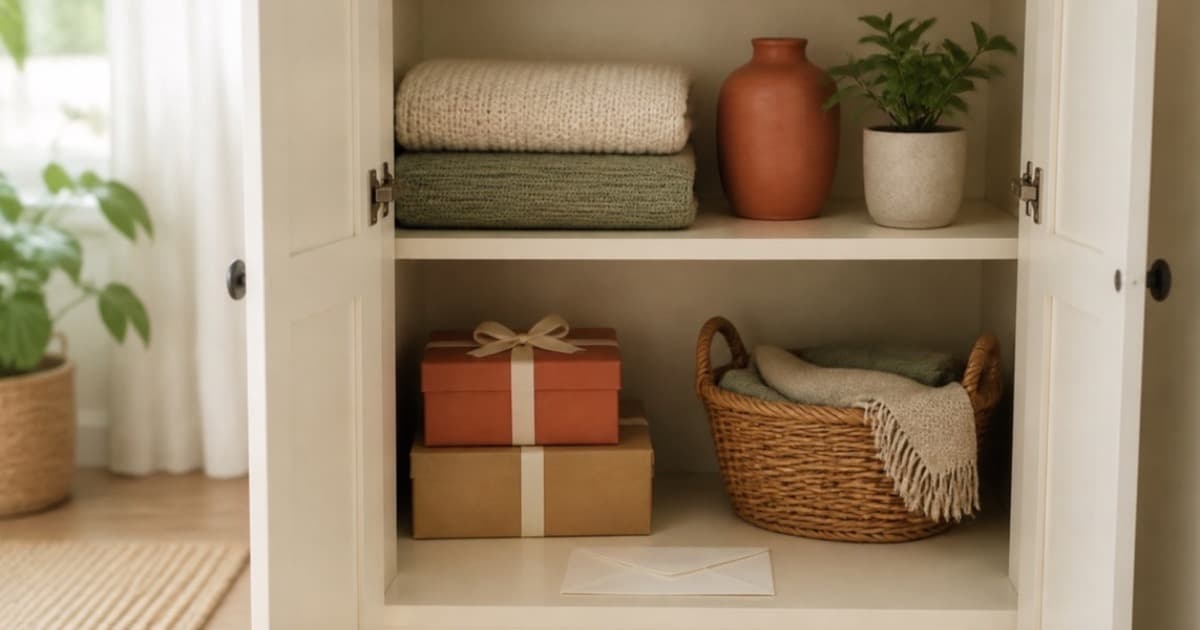
I have a cupboard. You probably have one too.
Mine contains, at last count: two unopened candle sets, a novelty bottle opener, a "gourmet" jam collection from 2019, a decorative bowl I have never once considered putting anything in, and a book about golf. I do not play golf. I have never played golf. I have no idea who thought I did.
Every item in that cupboard was given with genuine affection. Every item has sat there for years because I felt guilty about doing anything else with it.
That guilt is the actual problem, and it's worth dismantling. Here's a clear framework for what to do with unwanted gifts — plus how to stop the cupboard filling up again next year.
The short answer
You have five options, roughly in order of preference:
- Return or exchange it — cleanest, and gets you something you'll use
- Regift it — fine, with rules
- Donate it — good outcome, low friction
- Sell it — fine, with discretion
- Keep it out of genuine sentiment — the only good reason to keep something you don't use
The one option that helps nobody is keeping it out of guilt, which is what most of us default to.
First: dismantle the guilt
Three things worth being clear about.
A gift transfers ownership completely. Once given, it's yours. There's no implied condition that you keep it, display it, or use it. If there were, it wouldn't be a gift.
The giver's goal was to make you happy. Almost nobody wants their gift to become a small burden sitting in a cupboard. If you could ask them — genuinely ask, with no social pressure — the overwhelming majority would say "oh god, return it, get something you like."
The mismatch is usually structural, not careless. Research on gift-giving finds systematic gaps between what givers pick and what recipients want. Ernest Baskin and colleagues found givers weight desirability while recipients weight feasibility (Baskin et al., 2014). Francis Flynn and Gabrielle Adams found givers expect appreciation to track price in ways recipients don't report (Flynn & Adams, 2009).
Nobody got the golf book wrong because they don't care about me. They got it wrong because gift-giving is a genuinely difficult prediction problem and people are systematically bad at it.
Option 1: Return or exchange
The best outcome, because it converts an unwanted object into something you'll actually use.
How to do it:
- Gift receipts make this straightforward. Most retailers allow exchange or store credit.
- No receipt? Many shops still offer store credit at the current price. Worth asking.
- Extended holiday windows are common — returns bought in November are often accepted well into January.
- Online orders are harder without an order number, but some retailers can look it up from the item.
Do you have to tell the giver? No. If they ask directly, be kind and honest: "It was such a lovely thought — I swapped it for the size/colour, I hope that's okay." Most people are entirely fine with this, and many are relieved.
Option 2: Regift, with rules
Regifting has an undeserved reputation. Done properly, it's efficient and harmless — an item that would have gathered dust instead goes to someone who wants it.
Done badly, it's genuinely embarrassing for everyone.
The rules:
| Rule | Why |
|---|---|
| Never within the same social circle | The original giver will find out. They always do. |
| Never anything personalised | Names, dates, monograms, inscriptions. Obvious and mortifying. |
| Never anything handmade | Someone spent hours on it. This one's a hard no. |
| Check for cards, notes and inscriptions | Inside books especially. Check twice. |
| Re-wrap completely | New paper, new tag, no old creases. |
| Only if you'd genuinely have bought it for them | If you're just clearing a cupboard, donate instead. |
| Keep a record of what came from whom | The most common regifting disaster is forgetting the source. |
The test: if the original giver walked into the room while the new recipient was opening it, would you be comfortable? If not, donate it instead.
Option 3: Donate
Straightforward, and the guilt-free option for most things.
- Charity shops take almost anything in good condition
- Unopened toiletries and cosmetics are welcomed by many shelters and support services — call first to check
- New toys are wanted by children's charities, particularly in the run-up to Christmas
- Food and unopened consumables go to food banks, provided they're in date
- Books to libraries, schools, prisons, or little free libraries
- Local buy-nothing groups find things a home fast and locally
For unwanted items in bulk, a single trip to a charity shop in January clears the whole cupboard in twenty minutes and feels genuinely good.
Option 4: Sell
Perfectly acceptable, with one piece of etiquette: be discreet about where you list it. A public marketplace post that the giver could see, or a social listing, is where this goes wrong.
Otherwise, selling an unwanted item and putting the money toward something you'll use is a completely reasonable outcome. Local pickup platforms, resale apps and marketplace groups all work.
Option 5: Keep it — but only for the right reason
Sometimes the right answer is to keep something you'll never use, and that's fine. Valid reasons:
- It's from someone who has died. Different category entirely.
- It's genuinely sentimental — it marks a moment or a relationship you want a physical reminder of.
- They'll definitely look for it and it matters to them. A parent asking after a photo frame is a real consideration.
- You might grow into it. Some gifts are early. Give it a year.
Invalid reason: "I'd feel bad." That's the cupboard. That's how the cupboard happens.
What to say if they ask
The awkward moment, handled.
"Do you use that thing I got you?" Find the true part. "I love that you thought of me for that." If pressed: "Honestly, I swapped it for [X] — I hope that's okay, it was such a kind thought." Most people respond well. Many are pleased you got something you wanted.
"Where's the vase I gave you?" "It's put away at the moment — the shelf situation in this flat is a nightmare." True in most cases, and it doesn't invite further inspection.
They spot it in a charity shop. Extremely rare, and survivable. "I'm so sorry — I was having a big clear-out and I clearly wasn't paying attention. That's on me." Own it, don't over-explain.
They ask directly whether you liked it. Usually they're offering an exchange. Take the offer: "I loved the thought — would you mind terribly if I swapped it for a different size?"
How to stop the cupboard refilling
The real fix isn't better disposal. It's better information flowing in the other direction.
1. Answer the question when asked. "Oh, anything, don't worry about me" is how you get a golf book. Give a real answer. Research consistently finds recipients appreciate requested gifts more than givers expect them to (Gino & Flynn, 2011) — the surprise is worth less than you think and the fit is worth more.
2. Keep a running list. When you notice something you'd like, write it down. Then you have an answer ready when someone asks. The birthday wishlist maker exists for exactly this, and it removes the awkwardness of being asked on the spot.
3. Name a category, not just an item. "Anything from [bookshop]" or "vouchers for coffee" gives people room to choose while keeping you out of candle territory.
4. Say what you don't want, kindly. "We're trying not to bring more stuff into the flat — food and experiences are perfect." Said in November, warmly, this works.
5. Propose the structural change. Secret Santa, kids only, a spending cap, or an experiences-only year. Someone in every family is waiting for permission. See the Christmas budget planner.
6. Give better yourself. Half of the cupboard problem is reciprocal — if you're giving generic gifts, you're likely receiving them. Our guides on choosing well and common gift mistakes cover the fixes.
Frequently asked questions
Is it rude to return a gift?
No. The gift is yours once given, and exchanging it for something you'll actually use is more respectful of the giver's intention than storing it out of guilt. Just be discreet unless asked directly.
Is regifting tacky?
Not if you follow the rules: never within the same social circle, never anything personalised or handmade, re-wrap completely, and only regift something you genuinely think the new recipient will like.
What do I say if someone asks about a gift I got rid of?
Find something true and kind: "It was such a thoughtful thing to think of me." If pressed, be honest that you exchanged it. Most people would much rather you have something you use.
Can I sell an unwanted gift?
Yes. The main etiquette point is discretion — don't list it anywhere the giver is likely to see it. Otherwise it's your property to do with as you like.
How do I stop getting gifts I don't want?
Answer honestly when asked, keep a running wishlist, name categories rather than staying vague, and gently say what you're trying to avoid. Most bad gifts are information failures, not care failures.
What should I do with gifts from someone who has died?
That's a different category entirely, and there's no obligation to make a decision quickly. Keep what carries meaning, and give yourself years rather than weeks to decide about the rest.
Should I keep a gift I'll never use just in case they ask?
Only if it's genuinely likely and genuinely matters to them. "I'd feel bad" alone isn't a good enough reason — that's exactly how cupboards fill up with objects nobody enjoys.
The takeaway
Nobody who gave you something wanted it to become a small guilty object in a cupboard. That was never the plan.
Return it, exchange it, regift it carefully, donate it, or sell it quietly. Keep the things that genuinely mean something and let the rest go — ideally to someone who'll actually use them.
And then answer honestly next time someone asks what you'd like, so there's one fewer golf book in the world.
Want to give better than you got? Describe the person properly and get 20 personalised gift ideas in about a minute — free, no sign-up, each one a real product. Or check something you've already picked with the Gift Checker before you commit.
Still stuck on the perfect present? The AI gift generator turns a one-sentence description into 20 personalized ideas in about a minute.