Occasions
Gifts for New Parents: What They Actually Need (From People Who've Been There)
When friends of mine had their first baby, they received forty-one newborn outfits.
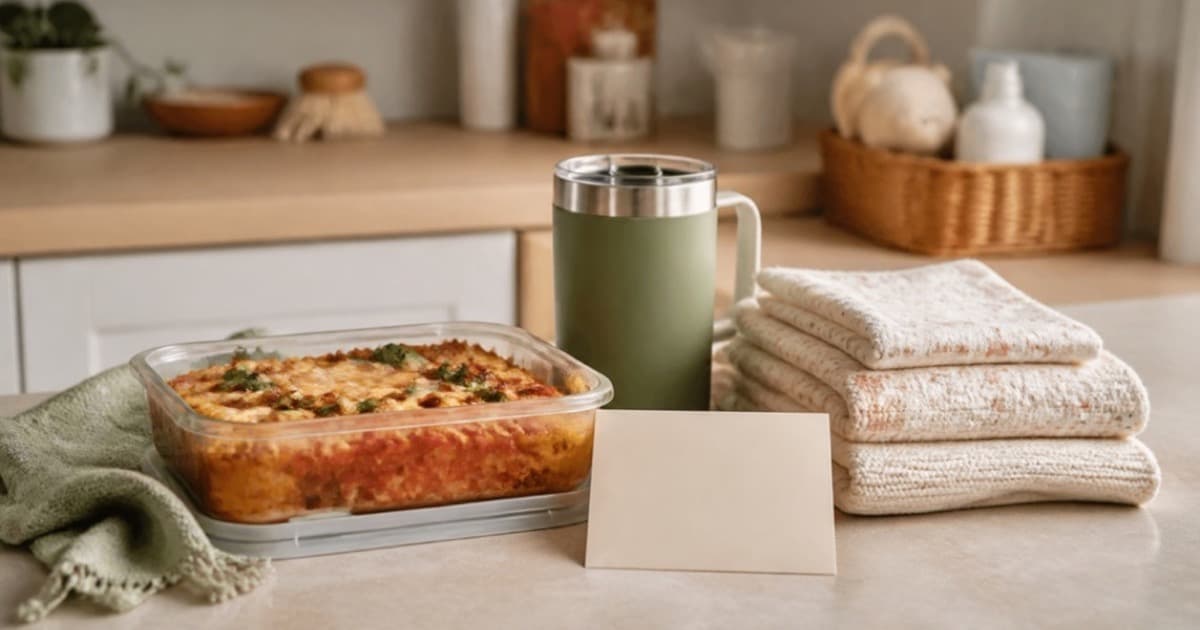
Forty-one. For a size the baby wore for about five weeks, during which he was sick on most of them. Meanwhile, the thing they talked about for a year afterwards was a colleague who turned up unannounced, didn't come in, handed over a lasagne and a bag of good coffee, and left.
That is the entire brief for gifts for new parents, and almost nobody follows it. The baby gets a mountain. The parents — who are exhausted, overwhelmed, frequently not eating properly and often quite lonely — get very little.
Here's what actually helps.
The short answer
Four categories, in order of how much they're appreciated:
- Food — meals that need zero preparation, and snacks they can eat one-handed
- Hands — your actual time, offered specifically and without being a guest
- Things for the parents — not the baby. The baby is fine. The baby has forty-one outfits.
- Practical baby items in bigger sizes — 6–12 months, when the gifts have stopped
And one timing rule: the best time to give is not the first two weeks. It's weeks six to twelve, when everyone else has moved on and the reality has set in.
Why most new-baby gifts miss
Everyone buys for the baby. The baby is the exciting part. But the baby does not have preferences, does not remember the gift, and will be given more clothing than it can physically wear.
Everyone buys newborn size. Newborn clothes fit for a few weeks, sometimes days. A drawer full of 0–3 months arrives in the first fortnight and is outgrown before most of it is worn.
Nobody buys for the parents. The people who are actually struggling get a card. This is the biggest gap by a distance.
Well-meaning "help" often creates work. A visitor who needs to be hosted — tea made, conversation held, house tidied beforehand — is a cost, not a gift.
Gifts that require assembly, washing, storage or research land badly. Ernest Baskin and colleagues found that recipients weight feasibility — how easy something is to actually use — more heavily than givers do (Baskin et al., 2014). For new parents, whose feasibility budget is close to zero, this effect is enormous.
Category 1: Food (12 ideas)
The highest-value category. New parents frequently eat badly for months.
- A frozen meal in a disposable container, labelled with heating instructions. The disposable part matters — no dish to return.
- A meal delivery service credit, set up so they don't have to research anything
- A local takeaway gift card for a place that delivers
- A grocery delivery, with the order already placed
- One-handed snacks — this is genuinely a category. Flapjacks, energy balls, good granola bars, nuts, dried fruit. Feeding a baby occupies both hands and takes a long time.
- Good coffee, ground or pods — whatever matches their machine
- A breakfast delivery for a specific morning
- A big batch of something freezable, portioned into single servings
- A cake or something nice for visitors, so they don't have to provide
- Bottled water and electrolyte drinks — endlessly needed, particularly for breastfeeding
- A hamper of easy lunch things — good bread, cheese, soup, fruit
- A meal train, organised by you, coordinating everyone else
On delivering food: message first, drop at the door, don't expect to be invited in. "Leaving this on the step at 6, no need to come out, no need to reply" is the perfect message.
Category 2: Hands (8 ideas)
Time is the scarcest resource in a house with a newborn.
- An hour of holding the baby while one of them sleeps or showers. Specifically offered, on a named day.
- A load of laundry — washed, dried, folded, put away
- Doing their dishes while you're there, without asking
- Taking an older sibling out for a few hours
- Walking the dog, daily, for a fortnight
- A supermarket run — text them "I'm at the shop, what do you need?"
- Paid help — a cleaner for a month, or a night nurse if that's within your means
- Driving them to an appointment, waiting, driving them back
How to offer it properly: never "let me know if you need anything." Exhausted people cannot delegate. Say instead: "I'm free Tuesday afternoon — I can hold the baby while you sleep, do a shop run, or just do your dishes. Which is most useful?" Specific, optional, no hosting required.
Category 3: For the parents (12 ideas)
The most neglected category and the one that gets talked about for years.
- A really good water bottle with a straw — usable one-handed, endlessly needed
- Comfortable loungewear in the right size, that they'd never buy themselves
- Excellent socks and slippers — a lot of time is spent standing and pacing
- Hand cream and lip balm — constant handwashing, dry winter houses
- A subscription — audiobooks, streaming, a music service. Long nights need soundtracks.
- A good podcast or audiobook recommendation list, written out
- A book with very short chapters, which is the only kind that works
- A massage or treatment voucher, with childcare arranged as part of the gift
- A nice, sturdy mug that keeps things hot — cold tea is the defining beverage of early parenthood
- Something for the non-birthing partner too. They're frequently overlooked entirely and are also not sleeping.
- A phone stand for the nursing chair
- A postnatal recovery kit — but only from someone close enough for that to be welcome
Category 4: For the baby, done well (8 ideas)
If you're buying for the baby, buy the things nobody else buys.
- Sizes 6–12 months and 12–18 months. Everyone buys newborn. Almost nobody buys ahead.
- Next season's clothes in the right size — work out what size they'll be in six months and what the weather will be doing
- Practical volume items — nappies in larger sizes, wipes, muslins. Unglamorous, endlessly consumed.
- A really good muslin or swaddle set — the good ones are noticeably better and people use them constantly
- A sleep sack in the next size up
- Books, board books specifically — they last years and get read hundreds of times
- A contribution to something big — a pram, a car seat, a cot. Pool with others.
- A savings contribution or investment, if that fits your relationship
Timing: when to give
This is the most actionable thing in this article.
Put a three-week reminder in your calendar the moment you hear the due date — the gift planning system covers the setup.
Weeks 1–2: Everyone gives. The house is full of flowers and outfits. Food is welcome; visits usually aren't. Drop and go.
Weeks 3–6: The support drops off sharply. Partners return to work. This is when meals and practical help are most valuable and least offered.
Weeks 6–12: Often the hardest stretch, and by now almost nobody is checking in. This is the best time to give. A meal, a visit that involves you doing the dishes, or a "here's a coffee, go and have a nap" at week eight lands harder than anything given on day three.
Months 4–12: Clothes in bigger sizes, books, and continued invitations that acknowledge the baby exists.
Put a reminder in your calendar for six weeks after the birth. Almost nobody does this, which is precisely why it works.
What to avoid
- Newborn-size clothing. They have plenty. It won't fit for long.
- Anything requiring assembly. You're giving them a task.
- Anything hand-wash-only or dry-clean-only. Everything gets covered in everything.
- Large items without asking. Space is limited and they may already have one.
- Strongly scented products. Newborn skin, and heightened sensitivities.
- Loud toys. Consider the household you're sending it into.
- Anything requiring storage. Space is at a premium and they're already drowning in equipment. The minimalist gift principles apply almost perfectly here.
- Advice disguised as a gift. A parenting book they didn't ask for reads as a comment.
- Visits that require hosting. The single most common well-meant mistake.
- "Let me know if you need anything." It sounds generous and delegates the work of asking to the most exhausted person in the room.
A note on second and third babies
Second-time parents get dramatically fewer gifts, and they arguably need more help — they have a newborn and an older child.
What works: taking the older sibling out, meals, and a small gift for the older child (who is having a strange week). The baby needs nothing; they already have everything from the first.
Frequently asked questions
What is the best gift for new parents?
Food and time. A frozen meal in a disposable container, or an hour of holding the baby while a parent sleeps. Both are consistently named by parents as the things they remember years later.
What do new mums actually want?
Sleep, food, and a shower. Gifts that deliver any of those — a delivered meal, an hour of childcare, one-handed snacks, a good water bottle — outperform almost anything bought for the baby.
What size baby clothes should I buy as a gift?
6–12 months or larger. Newborn and 0–3 sizes are heavily over-gifted and outgrown quickly. Also think about what season the baby will be in at that size.
When is the best time to give a new baby gift?
Weeks six to twelve, when everyone else has stopped and the initial support has faded. Set a calendar reminder for six weeks after the birth — it's the single most useful thing on this list.
What should you not buy new parents?
Newborn clothing, anything needing assembly, loud toys, strongly scented products, large items you haven't checked they need, and parenting books they didn't ask for.
How do I help without being intrusive?
Offer something specific and make it easy to decline. "I'm free Tuesday — I can do a shop run, hold the baby while you nap, or drop food at the door. Which is most useful?" Then don't expect to be hosted.
What's a good gift for the second baby?
Meals, help with the older sibling, and something small for the older child. Second-time parents need practical support far more than baby items, which they already own.
The takeaway
The baby will be fine. The baby will receive more clothing than it can wear, in a size it will outgrow before it's worn.
Feed the parents. Give them your hands, specifically and on a named day, without needing to be hosted. Buy something for them rather than the baby. And do it at week eight, when the flowers have died and everyone else has gone quiet.
Turn up with a lasagne. Don't come in. It's the gift people still talk about a year later.
Not sure what to send? Describe the situation — "first baby, six weeks in, they cook a lot, $60" — and the free AI gift finder returns 20 real ideas in about a minute, free and with no sign-up.
Still stuck on the perfect present? The AI gift generator turns a one-sentence description into 20 personalized ideas in about a minute.